
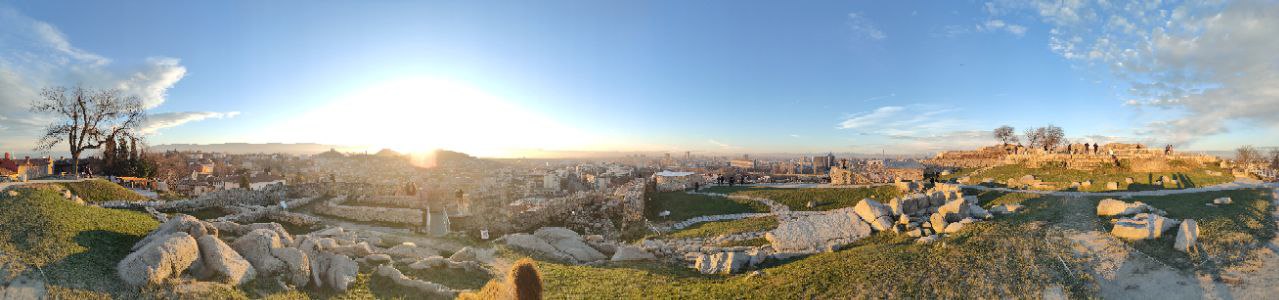
Plovdiv: Why Rome Can Wait While You Drink Coffee at Nebet Tepe
Have you ever tried walking on the sandals of Philippine legionnaires in ordinary flip-flops? I don't recommend it. But that's what Plovdiv is all about. Here, history isn't hidden behind dusty museum display cases; it literally bites into the soles of your feet.
Plovdiv is older than Rome and Athens. Seriously. While in other parts of Europe, people were just learning not to throw stones at each other, life was already in full swing here. And if you came to Bulgaria just for the sea, you've made a grant mistake. We'll fix it.
Old Town: Architectural Chaos You'll Fall in Love with
The first thing you need to do is get lost in the Old Town (Staria Grad). It's a true Bulgarian Revival sanctuary. The houses here look like they were designed by a mad, yet brilliant, carpenter: the second floors are wider than the first and overhang the street so much that neighbors across the street can literally shake hands without leaving their bedrooms.
Why was this done? Taxes. Taxes used to be based on the size of the foundation. Bulgarians are a cunning people: a small foundation, but entire mansions on top. Step into the Hindliyan House or the Kuyumdzhioglu House (now the Ethnographic Museum). Carved wood ceilings, murals on the walls, and an inexplicable silence, even though the modern avenue roars a few hundred meters away.
Ancient Theater: The Best Acoustics in the Last 2,000 Years
You're walking peacefully between the houses, turn a corner, and bam! A huge marble amphitheater. It was discovered by accident in the 1970s after a landslide. Can you imagine the shock of the locals? We lived above the Marcus Aurelius Theater and had no idea.
Tip: If you're lucky, buy a ticket to an opera or rock concert held here in the summer. Sitting on the same marble steps where ancient audiences sat and listening to music in the open air is absolutely tingling. Just be sure to put a pillow under your butt; marble is cold.
Kapana—the neighborhood where everyone hangs out
Let's descend from antiquity to modernity. The Kapana neighborhood (translated as "Trap"). Once home to craft workshops, it's now the center of Bulgaria's hipster scene. Narrow streets, flags overhead, graffiti (real art, not spray-painted scribbles), and endless coffee shops.
No need to rush here. Plovdiv is the capital of Bulgarian "aylyak." Aylyak isn't just laziness, it's a philosophy. It's the ability to savor the moment when the rest of the world is waiting for you to finish your craft ale or Turkish coffee. Looking for authentic Plovdiv sights? Here they are, in a glass of local wine at one of the bars in Kapana.
How to survive in Plovdiv without sore feet
Forget heels. If you see a girl in stilettos in the Old Town, she's either a heroine or a tourist who hasn't read this text.
Drink water from cesm. There are drinking fountains throughout the city. It's clean, cold, and free.
Climb Nebet Tepe for sunset. It's one of the hills on which the city stands. The view of Plovdiv in the rays of the setting sun is something you'll remember at the office on a gloomy Monday.
What to see in Bulgaria, if not just the beaches? Plovdiv provides the answer without further ado. It's a city that smells of heated stone, roasted meat, and a little bit of eternity. It's not trying to please you; it's simply living its life for the last eight thousand years. And it seems to be doing a pretty good job.
 "Bulgaria Holiday Transfers" is one of the best ways of comfortable transfer in Bulgaria.


